
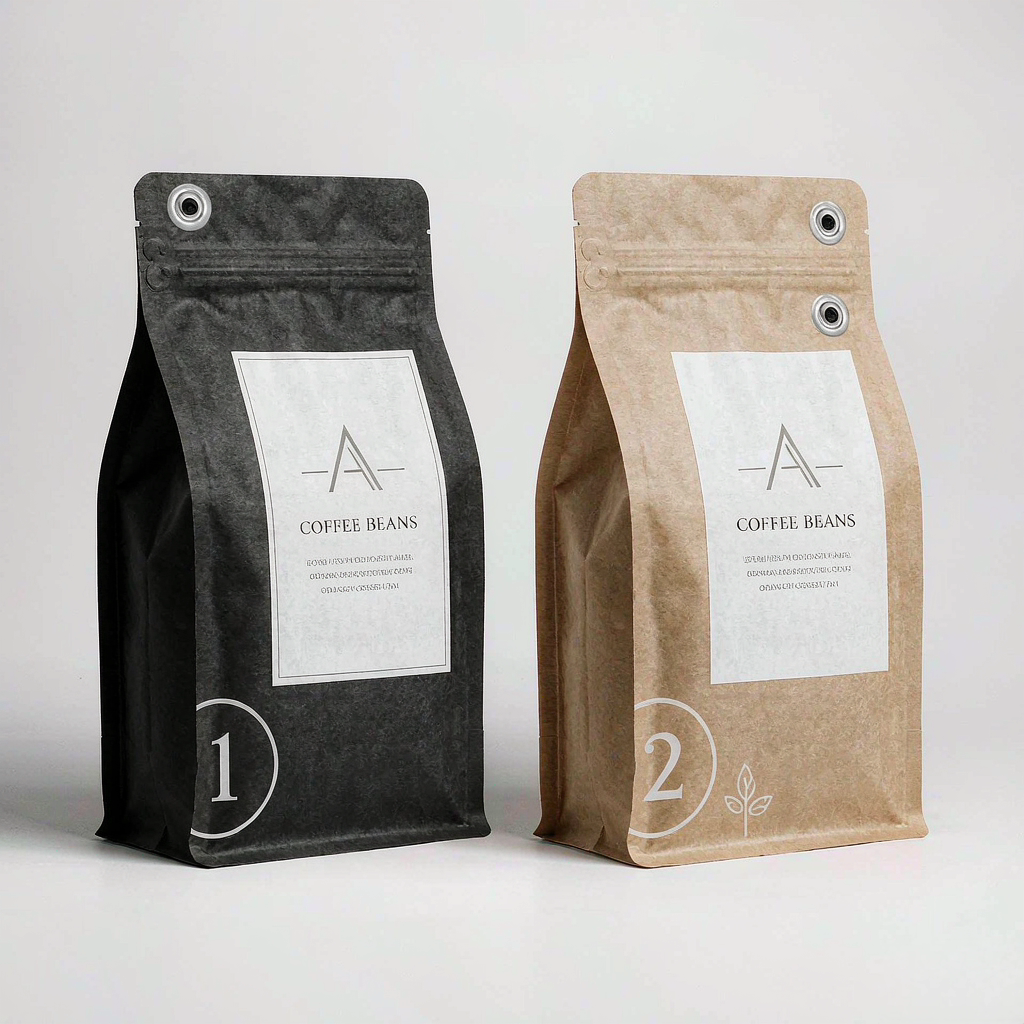
Freshly roasted coffee is not a finished product the moment it leaves the roaster — it is still breathing. For days after roasting, beans keep releasing carbon dioxide (CO₂). Trap that gas inside a sealed pouch and the bag can balloon, burst at the seam, or — just as bad — suck outside air back in and let oxygen stale your roast. A one-way degassing valve solves both problems at once. This guide explains what the valve does, when you actually need one, and how to brief a factory so you avoid leaking, under-performing pouches.
What a One-Way Degassing Valve Actually Does
A degassing valve is a small, low-cost membrane built into the pouch wall. It lets CO₂ escape from inside the bag while blocking outside air from entering. That single-direction flow is the entire point: your coffee degasses without oxidizing, and the bag stays flat and intact through transit and shelf life. Learn more about the component in our guide to the one-way degassing valve.
When you source through our coffee bags line, the valve is the difference between a premium roast that arrives fresh and one that shows up bloated or flat.
Do You Always Need a Valve?
No. Dry snacks, pet treats, and most powdered goods are fine without one. But for roasted whole-bean or ground coffee — especially coffee exported to warm, humid markets across the Middle East and Southeast Asia — a valve is close to non-negotiable. Heat accelerates degassing, and without venting, bag pressure builds fast.
For non-coffee items, browse our snack packaging and pet food packaging ranges, which are engineered for different barrier and seal requirements.
Valve Placement Matters More Than You Think
Placement affects both function and print layout. Most suppliers mount the valve on the front panel, centered or offset, clear of the zipper and side seal. A valve placed too close to a heat seal can weaken the weld and trigger the very leak you were trying to prevent.
We cover common seal-failure causes and prevention in our custom FAQ, including how valve position interacts with your chosen packaging equipment at fill time.
How to Brief Your Factory
When you request a quote, specify: bag size and style, film structure and barrier level, zipper type, and valve model or brand if you have a preference. Always ask for a valve leakage test report and confirm the valve is food-contact compliant for your destination market.
Production timelines and MOQ vary by structure — exact [factory confirmation pending] figures should come from your supplier before you commit. If you need help reading a quotation line by line, our team can walk you through it.
A Note on Display and Retail
If you also run a café counter or sell coffee gear and collectibles, our acrylic display boxes present and protect product on the shelf — a natural companion to a well-specced coffee pouch.
Ready to Spec Your Coffee Pouch?
A good pouch partner does more than sell film; they help you avoid failures. From material thickness to valve specs, small choices compound into freshness, shelf life, and fewer returns. Contact us today and we’ll help you build a bag that protects the roast from roastery to retail shelf.